


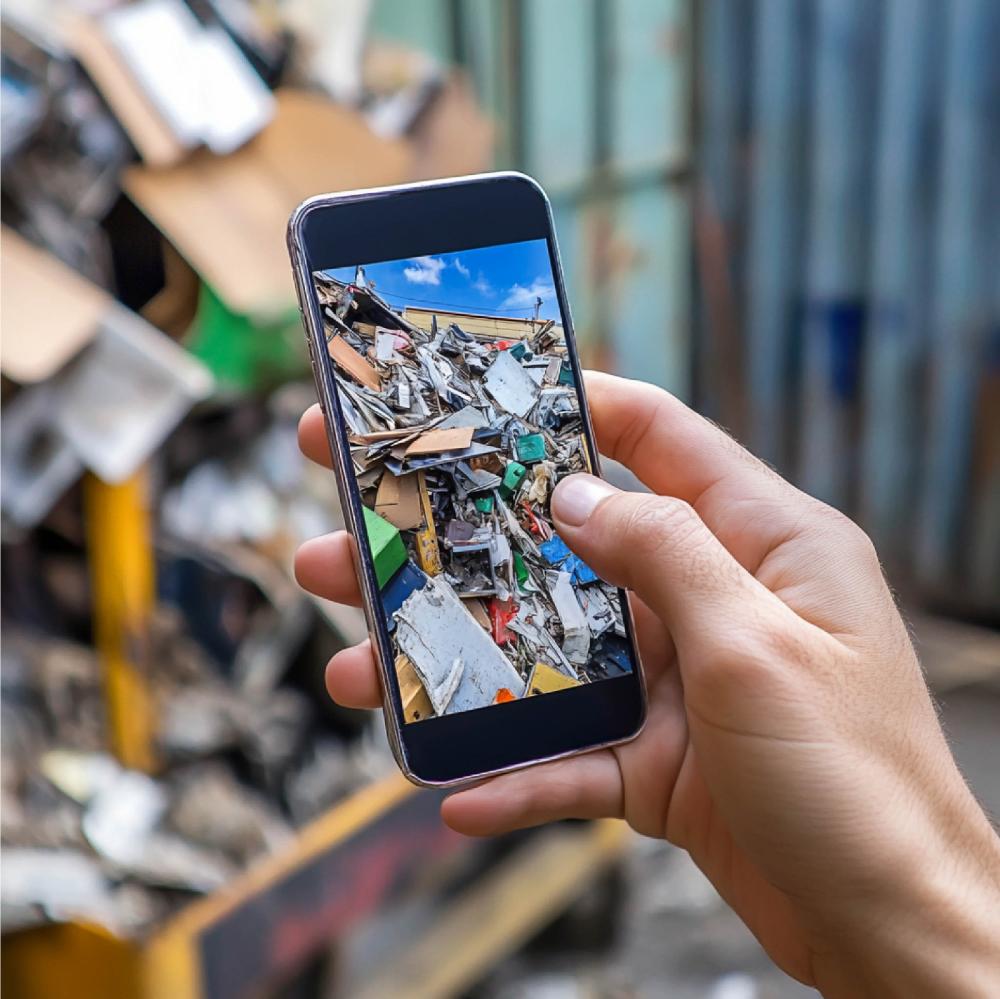
CleanApp didn’t begin as a business pitch — it began with a problem no one wanted to take responsibility for. A polluted riverbank, a hazardous crack in a building, a toxic leak in a parking lot, an app glitch affecting millions. The kinds of issues everyone sees, but everyone assumes belong to somebody else. Below, we bring you an inspiring interview with the creators of the Clean App, Boris Mamlyuk and Anuj Das Gupta.
Boris Mamlyuk, formerly a law professor in Memphis, remembers standing in front of an illegal dumpsite oozing chemicals into the Mississippi River while officials debated jurisdiction. Meanwhile, Anuj Das Gupta, a technologist with a background in both Buddhist discipline and high-level engineering, understood how systems could turn individual moments into collective awareness.
Together, they built CleanApp: a one-click tool that turns everyday observations into action. Take a photo. Submit. The system analyzes it, maps it, alerts responsible parties, and rewards those who help fix the issue. No forms, no bureaucracy, no endless “someone should do something about this.”
CleanApp is not just an app about trash or defects. It’s a feedback network — a shift from silent frustration to shared accountability. A way to prove that one small action, multiplied, becomes infrastructure.
CM: Could you tell us how the idea for CleanApp was created? What motivated you to start this particular project?
BM: I was a law professor at the University of Memphis, School of Law, working in a beautiful historic building right on the banks of the majestic Mississippi River. On one of my lunch walks, I stumbled upon a massive illegal dumpsite, rusted barrels oozing green sludge right into the river. Classic toxic dumpsite. I called the city & raised this issue with my law school colleagues who included city officials, including the Mayor. Nobody could solve the problem by legal means. “It’s a federal issue!” “It needs to be fixed by the railroad.” “No, this isn’t our problem.” I realized what’s needed is a single tool for mapping these types of problems and casting a public spotlight on them until they get fixed.
CM:To what extent did your experience or personal story influence your decision to focus on environmental issues and technology?
BM: I came to the USA as a 9 year old refugee in 1992. My mother was a doctor in the USSR who then had to clean rich people’s homes just to put food on the table. As kids, my sister and I were cleaning by her side. That sort of experience really tests your nerves. Early CleanApp ideas were born there: build smart cleaning robots so I could go back to school and play with my friends, and my mother wouldn’t need to scrub other people’s toilets.
CM: How would you describe the mission of CleanApp in one sentence?
ADG: Trash is Cash.
BM: Make the world a cleaner and safer place, one CleanApp report at a time.
See something? CleanApp.
CM: How does the application work — what data does it collect and how can users view it?
ADG: Users send reports by taking an in-app photo. The App does not collect any personal information, the AI technology behind it removes any faces, license plates and other such personal identifying information. Only the location of where it was taken is attached to every report. The App rewards those who report incidents and those who respond to them by verifying if a report is accurate with a photo of the same location, or by actually addressing the problem in that report and then taking a photo as a proof. Photos are proofs – as pictures speaks a thousand words.
CM: Which technologies are behind the application (e.g., sensors, IoT, crowdsourcing, GIS), and what were the biggest technical challenges you faced?
ADG: We crowdsource reports with a dynamic blockchain reward, our blockchain token called KITN. Players get 1 KITN for each report they submit. 2x KITNs if your report ends up verifying someone else’s report. Plus very generous bonuses for referrals. We use advanced open-source GIS tools to display these live reports on our public map. A big technical challenge is displaying all of these reports on the public map & making it work quickly. Because it’s a lot of data that’s getting updated in real time.
Each report is automatically AI-analyzed on our fine-tuned OpenAI and Gemini models. The AI analysis is extremely powerful and lightning quick: report to analysis takes less than 20 seconds! Given the pace of progress in AI, the coolest thing is that this is the worst our technology will ever be. The next generation of models will be 10x more powerful. This translates into CleanApp UX that feels more and more magical. With wearables like smart watches and smart glasses, soon you’ll be able to click your fingers or wink and a CleanApp report gets sent.
CM: The app includes a “Brand Dashboard” – could you explain what that means and who the potential users of that segment are?
BM: Brand dashboards are automatically created when there are multiple reports about a particular site, app, product, or location. For example, the global Hilton brand has a dashboard, composed of hundreds of other dashboards for every Hilton hotel globally. Users submit a photo about a defect or leave positive feedback about Hilton Dubai. Who would want to know about this, and when? It’s not just the management of the local Hilton in Dubai. The corporate office wants to know about this ASAP. Neighboring hotels may want to know about this (if it’s a serious structural issue, for instance, or a massive water spill). Our dashboards give businesses this visibility, allowing them to significantly lower maintenance and legal liability costs – boosting their profits and client satisfaction.
It’s not just physical properties. Dashboards are also created for apps. For example, our users identified a fatal bug in Google Ads that has been live on the Google platform for more than 4 months. We document & raise the urgency of this bug with Google each time an additional report comes in.
CM: Who is your primary target group — individuals, organizations, companies, or institutions?
ADG: Individuals who will be reporting and responding to incidents. Institutions, such as property owners (e.g., hotels, airports), brand operators (e.g., Coca-Cola corporation), tech companies (e.g., Google, Facebook), municipalities (e.g., the waste management departments) who would be receiving these reports with analytics to help them maintain the highest level of quality with regard to the market.
CM: To what extent are you already present in the international market, and what activities are you planning in Montenegro and the region?
BM: Our app is live globally. We have a very special bond with Montenegro due to its unique status as an ecological state. Montenegro really is one of the most beautiful places on Earth. We were fortunate to be guests at early blockchain hackathons in Montenegro over the past few years, and we strongly believe that Montenegro can set an example for the rest of the world on new types of public-private-citizen partnerships. Montenegro’s cultural respect for nature shows itself in the vibrant civil society sector, with leading organizations like UZOR. We’re truly honored to be working side-by-side to showcase glocal impact – local and global at the same time.
CM: What are the biggest obstacles for users when adopting an app like this, and how do you overcome them?
ADG: With any social network, the biggest challenge is feeling you’re doing it alone. We spent a lot of time improving the app to show you nearby reports so you can see there are other people in your community who care. It’s a really cool feeling to open the map and see other people active in your area. You get goosebumps, and want to invite your friends into the game. That’s the main challenge and opportunity we’re working on right now.
CM: In what ways does CleanApp contribute to improving the environment — do you have any concrete examples or results you can share?
ADG: There’s a giant 7-story Class A building that was built for the largest insurance company in Switzerland. People have stereotypes about Swiss construction being perfect. One day, a CleanApp report revealed a giant crack in the wall that turned out to be a big structural defect. It’s now being fixed. One click, and potential disaster averted. Another CleanApp hotspot is Los Angeles. People frequently dump used motor oil, car batteries, and other toxic stuff in Walmart parking lots. When reports come in, they’re instantly sent to Walmart, and the hazards are cleaned up. Everyone wins.
CM: How do you measure the “success” of the app — by number of downloads, number of reported incidents, reduction of pollution, or something else?
B.M: While all of those numbers are indicative of the success, the true measure lies in the ratio of reports that eventually gets resolved. In the app, users will be able to see which reports are still pending to be resolved, others can then boost those pending reports by taking photos of the same incident, as a type of multiple confirmations. Institutions, property owners, brand managers, app makers could then use these analytics to prioritize their responses. Thus, closing the feedback loop is the ultimate measure of success, the more loops closed compared to those left open, the higher is our success.
CM: Which organizations, cities, or companies do you already collaborate with, and what benefits have you achieved together?
ADG: Most recently, we partnered with the Ethereum World’s Fair in Buenos Aires, Argentina. Over the last month, we’re activating the Edge City community in Patagonia, culminating in Devcon(nect), Ethereum’s annual developer conference that brings tens of thousands of developers and community members together. These types of massive events (conferences, World Cup, Olympics) are perfect for CleanApp because they show the importance of a single feedback tool … versus a specialized feedback app for the city of Paris, another feedback app for restaurants, a third feedback app for your favorite app, and so on. Our secret sauce is simplicity: 1-click and done. We then do everything possible to make sure your feedback reaches people who can do something about it.
CM: How important is the involvement of the community and users — how do you motivate them to report data and actively participate?
B.M: Empowering individuals to report any and every incident by rewarding all such positive behavior with blockchain based tokens which can then be converted to cash. Essentially, creating a circular economy where the more you help the environment, the more you are rewarded and the better the institutions value and companies networth goes up as they are perceived to be doing the right thing by reducing waste in their processes.
We are launching the CleanApp Ambassadors program throughout the world: students, young people, professionals who want to talk about the environment on their weekends. They will be encouraging their friends, family, colleagues and neighbors to CleanApp at every incident in their lives. Any time you want to leave a review, a comment, a feedback, the best and easiest way is to take a single photo with CleanApp.
City based and brand oriented campaigns will be launched all around the world to get people motivated around a single idea. As an example, that could be a specific neighborhood in Podgorica where we have a weekend campaign inviting everyone to come out to the streets and start reporting. Another example would be around a well recognized brand, such as coca cola, by getting everyone around the world for a specific day to take photos of any litter with coca cola bottles in it – all those photos will be forward to the company behind coca cola to then have them reward those reporters with our blockchain token.
CM: What are your plans for the upcoming period? How do you see the role of technology (e.g., AI, big data, sensor networks) in improving environmental monitoring over the next five years?
ADG: CleanApp is at the juncture of AI that analyzes every report to annotate and add descriptions, crypto to reward those reporting, and big data to map out every part of the real world and the online space for any and every incident, robots to then physically clean out the space, sensor networks to automatically report out-of-sync CleanApp messages to the dashboard that is to be monitored by institutions and responsible parties.
CM: What was the most challenging moment during the development of the project, and what did you learn from it?
BM: Since reports could be of any kind of incident involving objects that could range to everything that exists on earth, there was no way to map incidents to the correct party who could respond. It is only in the last year that this could be addressed using AI – it provides a way to dynamically heterogeneous matches. This means every report is now analyzed by our AI to discover who are the responsible parties needed to resolve the incident – is it the city municipality, or a property owner, or an app maker or some other person, even finding out their contact details to send the reports to. AI now acts as the ultimate triage machine and the more CleanApp is used, the better the triage becomes as AI is self-learning and self-improving based on usage.
CM: What would you say to users in Montenegro who are considering getting involved through the app — how should they start, and why is it important?
BM: Trash is Cash. As early adopters, Montenegrins will directly benefit from the value loops we’re creating. Remember that Hilton dashboard, and that massive bug on GoogleAds? We immediately send those reports to Hilton & Google and so on. But if they want to see the full bouquet of feedback that users submit about their properties, they need to pay for access. Our goal is to take at least 50% of that revenue and buy your tokens with that money, creating a natural demand for your token. Therefore, the more valuable your reports, the more valuable your rewards. The more people you introduce into the game, the more tokens you get. It’s multi-level marketing, a green Pyramid Scheme, but for a completely noble purpose. You have nothing to lose, and everything to gain, from trying CleanApp today.