


After tethered caps, there is a new change for plastic bottles
After the introduction of tethered lids, the European Union has made another important step in the fight against plastic waste. As of 2025, all plastic bottles will have to contain at least 25% of recycled plastic, whilst by 2030 this percentage will have risen to at least 30%.
The goal is clear – reduce the use of new, so called “virgin” plastic and introduce the system of circular economy, where materials are not discarded, but reused.
Although the bottles made of recycled material can have slightly different shade, their firmness and hygienic features remain unchanged. What changes is the awareness – about how every bottle, every lid and every choice of a consumers impacts the condition of the planet.
This regulation is a part of a wider EU strategy in the fight against microplastic – those invisible particles which end up in water, food and soil. Less new plastic means less fossil fuels, smaller emission of harmful gases and a step closer to cleaner ecosystem.
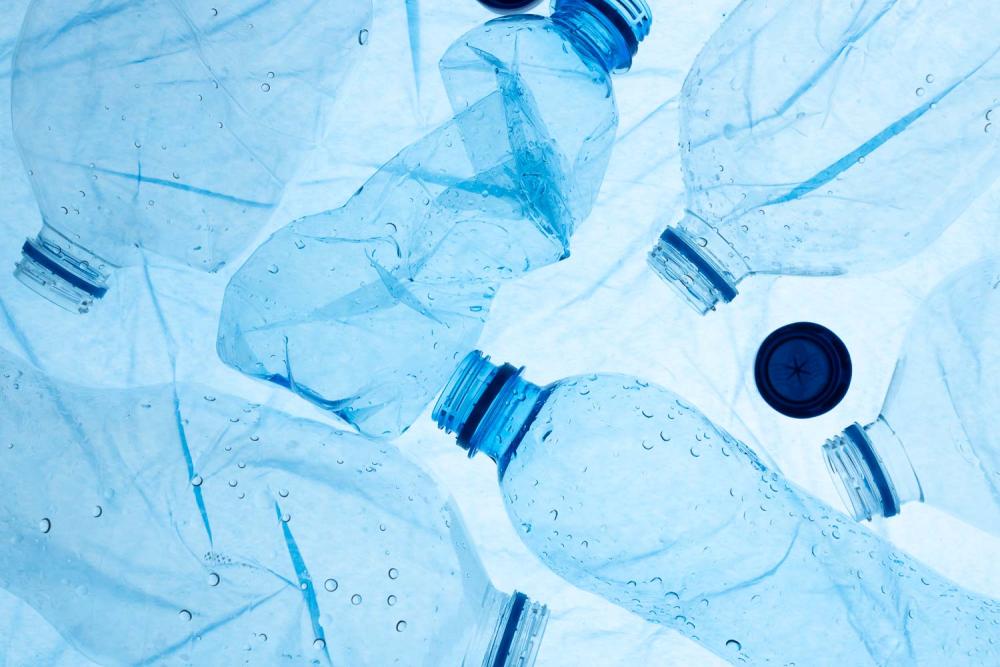
In Italy, just like in other EU member states, the new regulation is interpreted as a key step towards more sustainable packaging, while experts expect that this model is going to become a standard even in the non-EU countries.
The shift to recycled plastic is going to bring significant benefits for the environment, but also technical challenges for the manufacturers who are to make sure for the new structure not to affect food safety and product durability. Nevertheless, the benefits are clear – fewer fossil resources, smaller emission of harmful gases and better quality of the environment.
After mandatory tethered lids, this is another important step in the evolution of plastic packaging and the global effort in reducing microplastic pollution. Therefore, recycled plastic is a new rule and not a matter of choice.
The Netherlands is our first association when we think of windmills but…
When we think of windmills, our first association is The Netherlands – a country of canals, green meadows created and maintained in the area which had once been marshland, lake…and wind which never stops acting on vanes of the old mills. Traditional Dutch windmills were used for grinding grain, extracting oil or pumping water from the marshes and they were a heart of everyday life and economy. Their recognizable shape became a symbol of the country, cultural icon which are still featured on picture postcards and souvenirs.
Today, even Montenegro, like many other countries worldwide, is building its own modern “windmills” – wind turbines. Although high metal structure of a wind turbine with three huge blades is far from wooden mills, the idea is the same: wind power is used for people’s wellbeing. Instead of grinding grain or pumping water, they generate electricity for thousands of households, starting the transition to renewable sources.
Traditional windmills and modern turbines share the same spirit – exploiting a natural element, adjusted to the needs of the time. One relates about the past, the other about the future, but both get the life going.
The power of sun and wind: historic turnaround
The data of the Ember Research Centre confirm that the world has finally started seriously changing its energy landscape: in the first half of 2025, for the first time in history, more electricity was produced from the energy of the sun and wind than from coal.
The growth of the renewables has been so powerful that it has completely satisfied the growing global power demand, reducing the role of fossil fuels in the global energy mix. The generation from solar and wind farms has grown to over 5.000 TWh, while the coal energy has fallen below 4.900 TWh.
The share of renewable sources in the global energy generation has grown to 34.3%, whilst the share of coal has gone down to 33.1%. Solar sources record impressive growth of 31%, and 7.7% growth of wind energy.
The Ember analyst, Małgorzata Wiatros-Motyka, said that “clean energy grows fast enough now to satisfy global electricity demand – this is a beginning of a major change”.
The Ember analysis covered 88 countries which account for 93% of the global electricity demand. When it comes to solar power, its share in the global energy mix has gone up from 6.9% to 8.8%.
China takes credit for more than half of global solar power generation growth, followed by the USA (14%), EU (12%), India (5.6%) and Brazil (3.2%).
The Ember states that four countries have generated more a quarter of their electricity from solar power, and that the number of countries which have generated more than 10% has risen to 29, from 11 in 2021.
Such changes are not only a technical issue – they indicate that global economy, slowly but surely, learns to function in harmony with the planet, and not against it, that progress does not have to mean resource exhaustion anymore, but their smart use.
Whilst in China and India power generation from fossil fuels has gone down, in the USA renewables have not kept pace with demand growth, thus the generation from coal and gas has gone up. In the EU, the generation from coal and gas has recorded a slight growth due to a smaller generation from wind, hydro and bio energy.
Earth which breathes more easily
The data and percentages might seem bleak, but behind every statistic there is a clear message: the world is changing. Slowly, yet irreversibly. Every new solar panel, every bottle made of recycled plastic and every decision to spend less – are parts of the same story. The story of the planet which is trying to breath more easily.
Sustainable sources of energy, circular economy and responsible consumption are not a trend anymore, but a matter of survival. Because if sustainability does not become our way of life, the question is not if, but when we will face the consequences.
The Earth has been sending us signals for a long time now – through climate change, disappearance of species, droughts and floods. Each signal is a call for us to change our relation towards resources which we easily take for granted.

But the good news is that the change is already happening. That every new decision brings hope. And that, perhaps for the first time, humankind has started to learn how to make progress without suffocating the planet that feeds it.





-100x100-rez.jpg)