


Amour — the most beautiful things are created when we listen to our own hearts
Nevena Đukanović from Herceg Novi does not belong to just one role. Behind the everyday life of a mother, wife, and entrepreneur is a woman who experiences the world through emotion — through colors, scents, poetry, and small details that make life special. Her essence, as she says, lies in creating and in the belief that the most beautiful things arise when we listen to our own hearts. It is precisely from this space of tenderness and authenticity that Amour was born — a brand created not from a business plan, but from personal transformation and the need to turn emotion into something tangible.
As she describes it, motherhood brought new depth — in feelings, responsibility, and her outlook on life. Priorities became clearer, time more precious, and courage stronger than ever before. Within this newly discovered strength, the idea emerged to give the word mom a special place in her creations, as a symbol of love, pride, and tenderness.
“It felt as if the arrival of my child awakened a strength I didn’t know I had. That was the moment I felt the need to create something of my own — honest and personal,” Nevena explains.
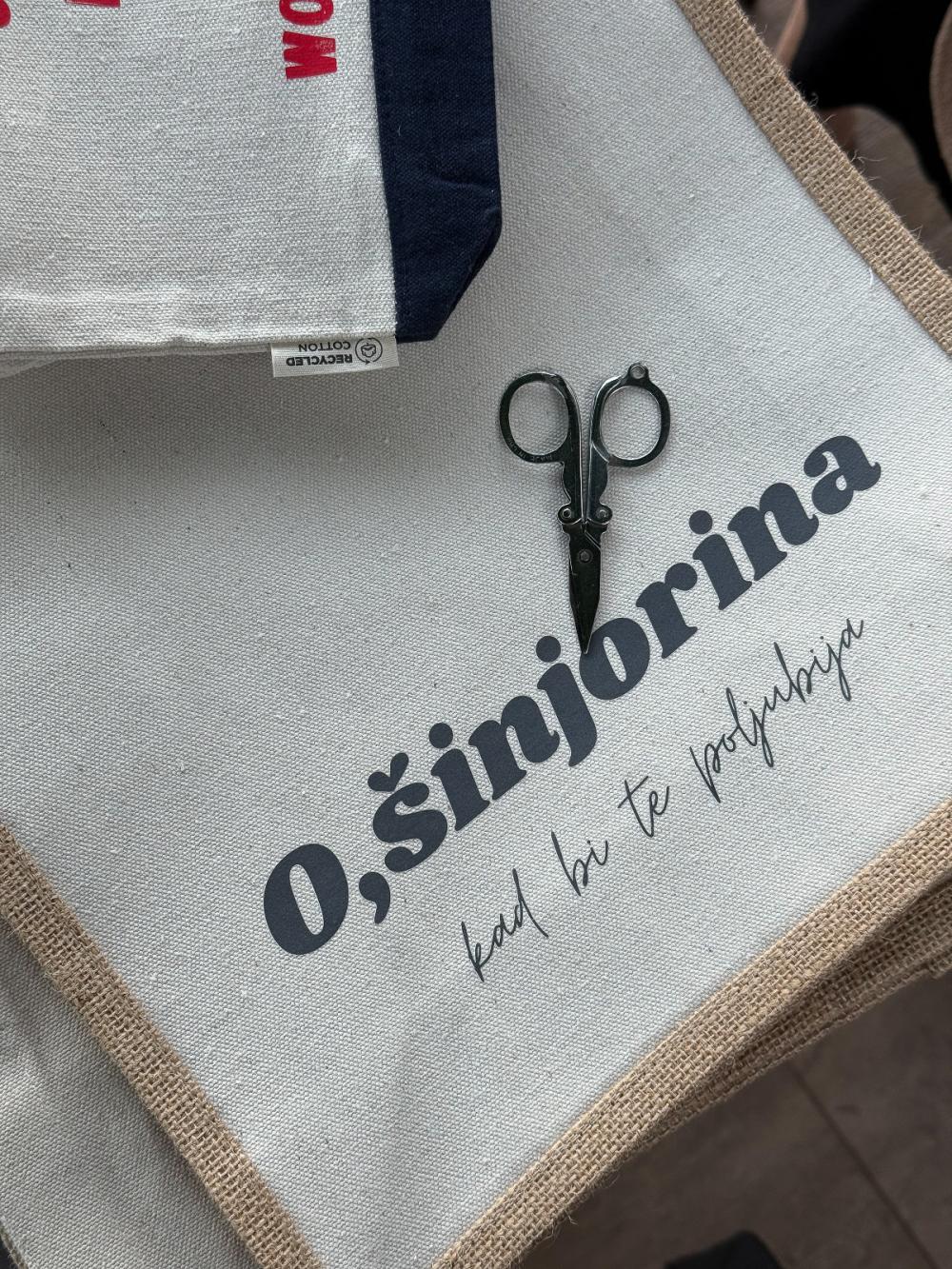
Amour was not born in a single moment, but through a period of growth — from the quiet of pregnancy, new dreams, and an inner voice that kept growing louder. In April last year, Nevena decided to listen to it. Without much noise, but with clear emotion, she took the first step and began a story that today carries a strong personal signature.
Balancing motherhood and running a brand, she admits, does not exist as a perfect state. It is a process — daily adjustment and learning not to be too hard on oneself. In that dynamic, she finds her greatest strength in family, which is not only support but also an active part of the creative process. A particularly emotional touch comes from her grandmothers, who hand-sew logo labels, turning each piece into a small family artifact.
“When you work from love, the boundary between private and professional begins to blur — because everything becomes part of the same story,” Nevena adds.
Support from loved ones, as well as from people who recognized the emotion behind the brand, was crucial in the early steps. The first bazaar in Tivat confirmed that what is created from sincere intention finds its way to others. A special place in Nevena’s story belongs to the designer who helped shape the visual identity, as well as to the memory of a beloved aunt to whom she dedicates this story — a person who recognized her uniqueness from childhood and believed in her unconditionally.
Fears, she says, were inevitable — questions about readiness, timing, and space in a small market. Yet the desire was stronger. Fear became a sign of growth rather than an obstacle.
The brand name came naturally. Before the name, there was emotion — love for family, creation, and life. Amour is far more than a name; it is a reminder that everything we do only has meaning when it comes from the heart.
The first pieces were beach bags and totes inspired by the sea, summer, and poetry — practical yet symbolic, intended for women who love freedom and the small things that awaken memories.
Today, the collection includes bags, totes, and embroidered mom pieces — tracksuits, T-shirts, and caps carrying deep emotional meaning. The creation of each product begins with a feeling — a moment, a thought, or a song. Sketches follow, then the selection of materials and details, while the final family touch gives each piece an invisible value that sets it apart from mass production.
“Behind every piece lies far more than what is visible — an idea, anticipation, and above all, emotion,” Nevena emphasizes.
Building a small, authentic brand in Montenegro is challenging, but limitations often highlight the value of a sincere story. Nevena believes people recognize authenticity and that consistency — even on a slower path — brings results.
In the future, she sees Amour as a brand that stays true to its essence while gradually evolving, especially in celebrating motherhood and femininity — without rushing, but with a clear vision and new pieces already in the making for the upcoming summer.
“Start with a small step. Believe in yourself. The most beautiful things are born from love and courage,” Nevena tells women who carry an idea within themselves but have not yet found the courage to bring it to life.
Tour Brain — from a personal story to a technological vision
At a time when technology is transforming nearly every industry, tourism still largely operates on principles reminiscent of past decades — numerous manual processes, disconnected tools, and daily logistics that consume time and energy. It is precisely in this space between tradition and innovation that the idea for Tour Brain emerged — a platform aiming to provide travel agencies with a simpler, faster, and smarter way of working.
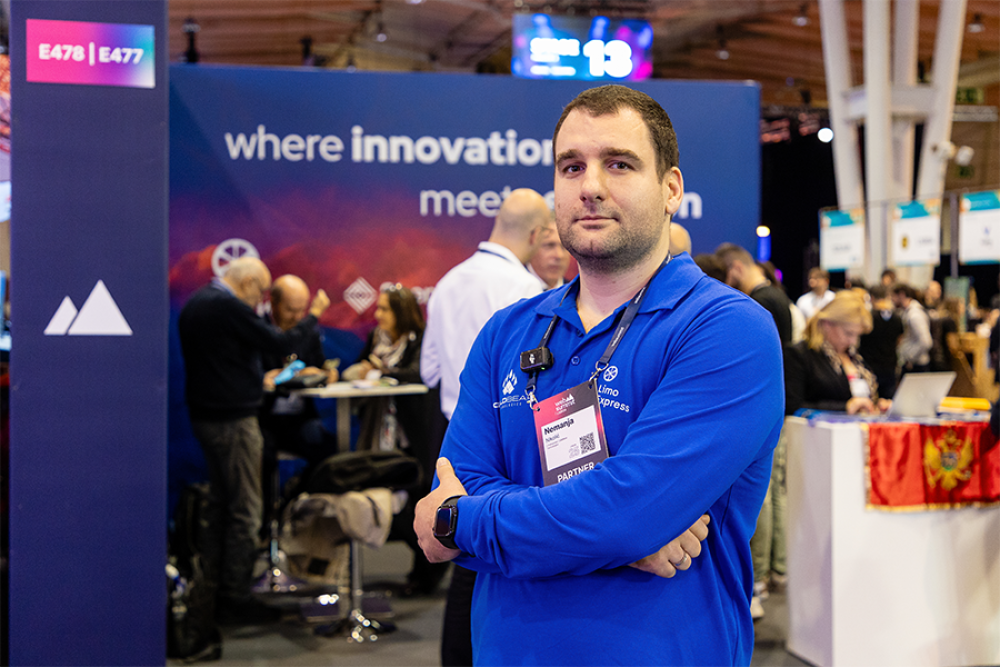
Behind the project is Nemanja Nikolić, founder and CEO of GoldBear Technologies from Podgorica, an IT company developing web, mobile, and AI software solutions. With more than a decade of experience building complex systems and SaaS products for the global market, Nemanja has built his career through various roles — from developer to team leader — and today leads a team behind multiple digital products, including the global limo industry platform LimoExpress.
The idea for Tour Brain did not come from theory, but from direct market experience. Through collaboration with travel agencies, it became clear that although certain business segments are digitalized, tour planning and organization still function in traditional ways.
“Through conversations with agencies, we realized there was significant room for improving processes, reducing manual work, and managing information more efficiently. Tour Brain was created as a response to that concrete market problem,” Nemanja explains.
Motivation for such an ambitious project, he says, was straightforward — market need. When many companies spend hours daily on processes that technology can simplify, the opportunity for innovation becomes obvious.
“We wanted to create a tool that would not only digitize existing workflows but enable agencies to work faster, smarter, and with less operational stress,” Nemanja adds.
Although Podgorica may seem like a small environment for developing tech products, this can actually be an advantage. Faster communication, easier collaboration, and direct market feedback allow more agile idea development.
“Working from a smaller environment often forces you to think globally from day one, which is a major advantage for tech products,” Nemanja points out.
In the early development phase, independence enabled by the company’s existing business played a key role, alongside institutional support recognizing the importance of innovation and technological progress. This combination allowed the team to develop the idea without pressure for rapid commercial return, focusing instead on product quality.
Tour Brain is designed as a centralized platform enabling agencies to manage the entire process — from itinerary creation and organization of guides and vehicles to location tracking and client communication.
“The goal is to have all information in one place, with automation of processes that are currently handled through Excel sheets or messages,” Nemanja explains.
Artificial intelligence and GPS technology add special value. AI optimizes planning and suggests solutions within seconds, while GPS provides real-time transparency and control, increasing safety and service quality.
“Instead of employees spending hours on logistics, the system can propose optimal solutions almost instantly, while GPS gives agencies full control and builds client trust,” Nemanja adds.
The initial focus is on local travel agencies, whose direct feedback will help further shape the product. After stabilization, expansion to regional and European markets is planned, with a clear ambition to become a globally relevant solution.
One of the biggest issues Tour Brain addresses is process fragmentation — using multiple tools and manual methods that increase errors and slow operations.
“Bringing all processes into one platform reduces mistakes, saves time, and allows better business control,” Nemanja emphasizes.
Currently, a six-member team works on the project across software development, product design, and business strategy. Completion of the MVP phase is planned for February next year, followed by testing with initial users and further improvements.
The greatest challenge, he explains, is not just technology development but understanding real market needs and creating an intuitive system flexible enough for various agencies worldwide.
“It’s not enough to build good software — you must understand user habits and adapt the solution to their workflow,” Nemanja stresses.
Although the technology is complex, selling innovation is often an even greater challenge, as changing work habits requires time and market education.
“Close collaboration with users and market education are just as important as product development,” he adds.
Building a global tech product from Montenegro today, he believes, is a realistic ambition. The internet and remote work erase geographical boundaries, while real challenges lie in market access, capital, and networking.
Therefore, Nemanja highlights the importance of institutional support — not only financial but also mentorship and education — as well as stronger connections within the domestic startup community and access to international investors.
“It’s important to build a culture where experimentation and attempts to create new products are encouraged, even when results are not immediately successful,” Nemanja concludes.