You may come to Sharm El Sheikh for the sea, coral reefs and sunshine, only to return home talking about the night you spent beneath the stars. Because some sunrises are watched from a hotel terrace. And for others, it is worth climbing all night. That is precisely the magic of Mount Sinai.
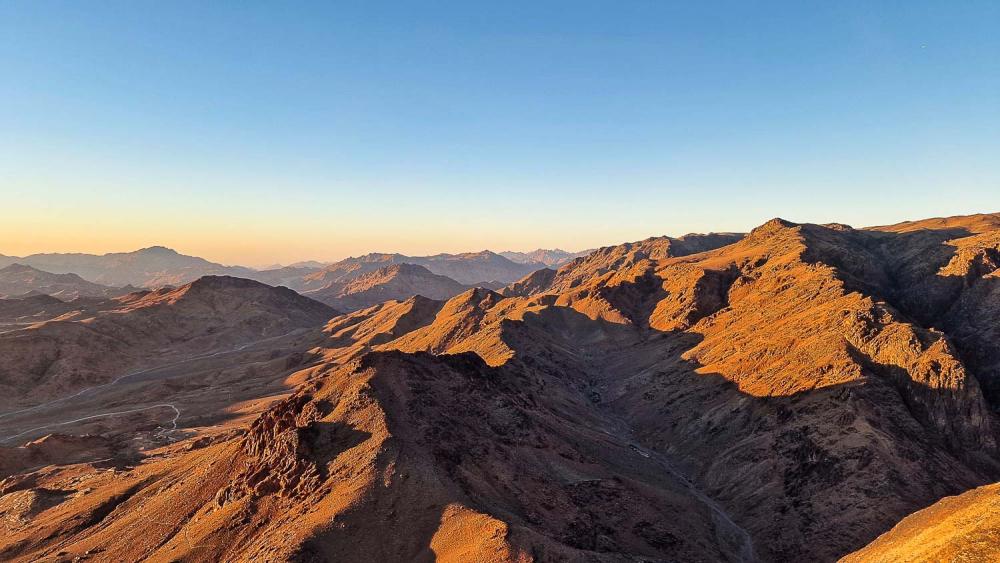
There are journeys where you see something, photograph it and move on. And then there are those other journeys, the ones that begin when every sensible traveller should be asleep. My climb up Mount Sinai belongs firmly to the latter.
We left Sharm El Sheikh deep in the night, leaving behind the hotel lights, music, palm trees and splendour of the Red Sea. At the edge of the city, heavily armed police and military forces were waiting for us. We all went through security checks, and then, in a long convoy escorted by police vehicles, we set off towards the mountain.
As the minibus travelled deeper into the Sinai Peninsula, the landscape was swallowed by darkness, and the feeling that we were entering an entirely different Egypt grew stronger. Somewhere ahead of us, among the desert mountains, Jebel Musa – the Mountain of Moses – was waiting, the place where, according to biblical tradition, Moses received the Ten Commandments.
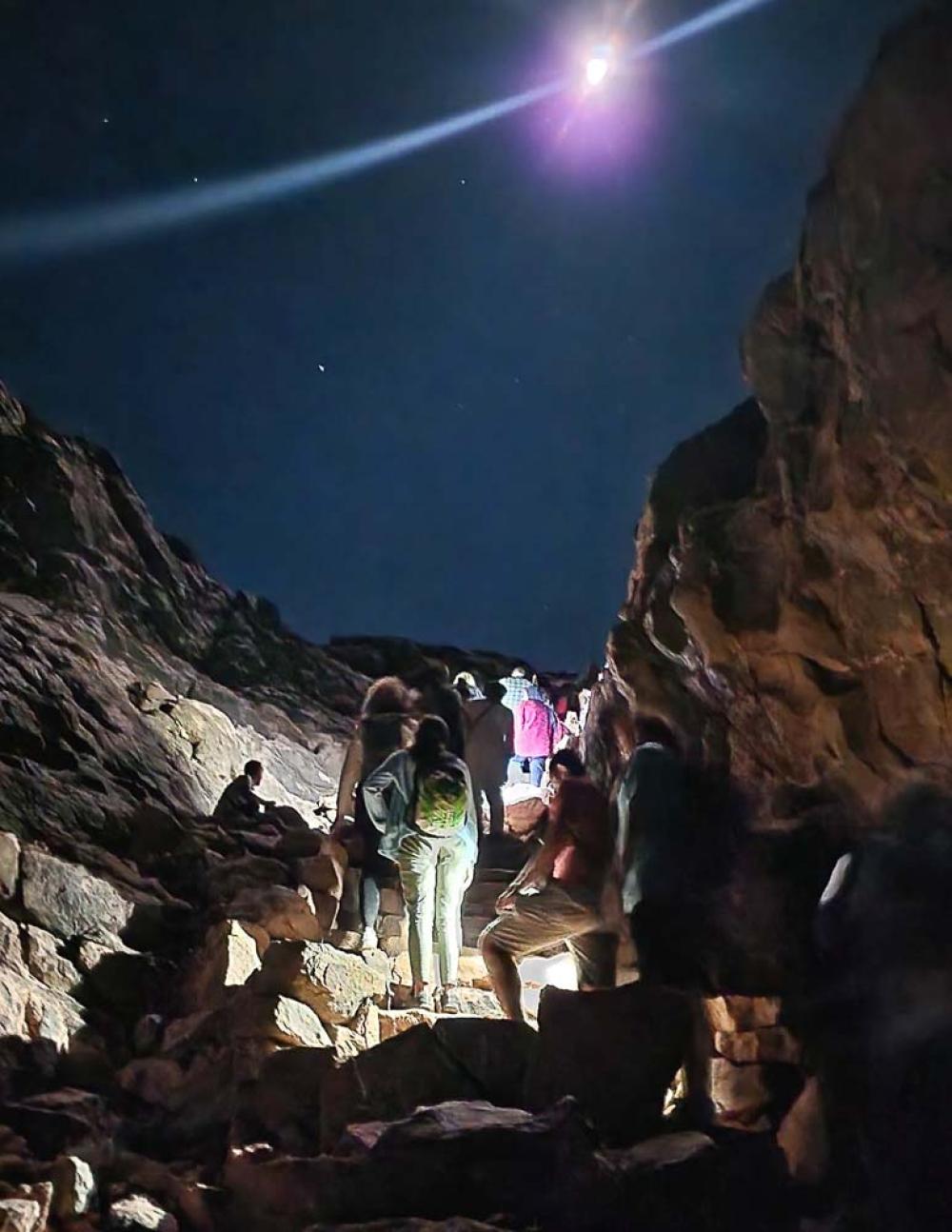
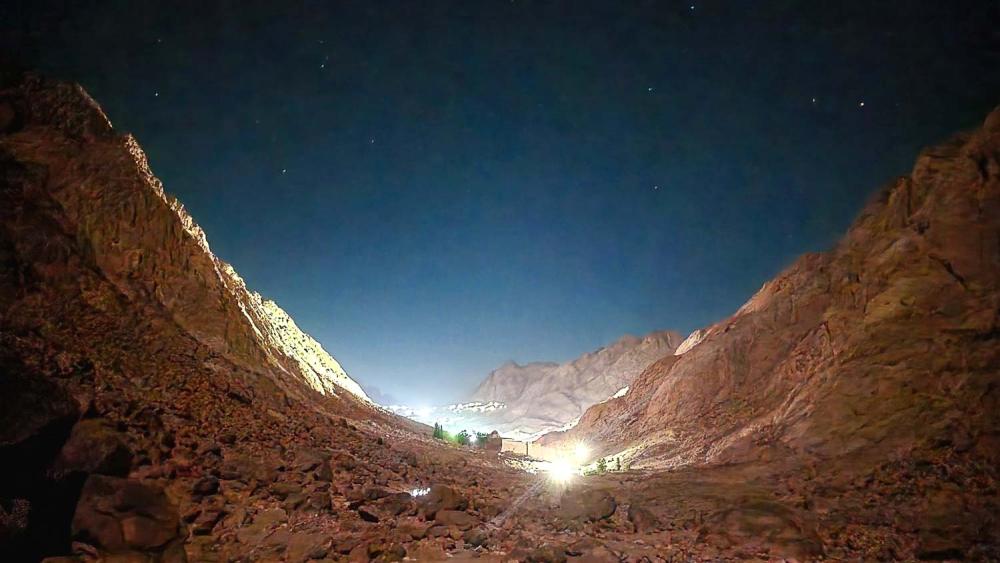
Beyond Saint Catherine’s Monastery, the winding trail towards the summit begins.
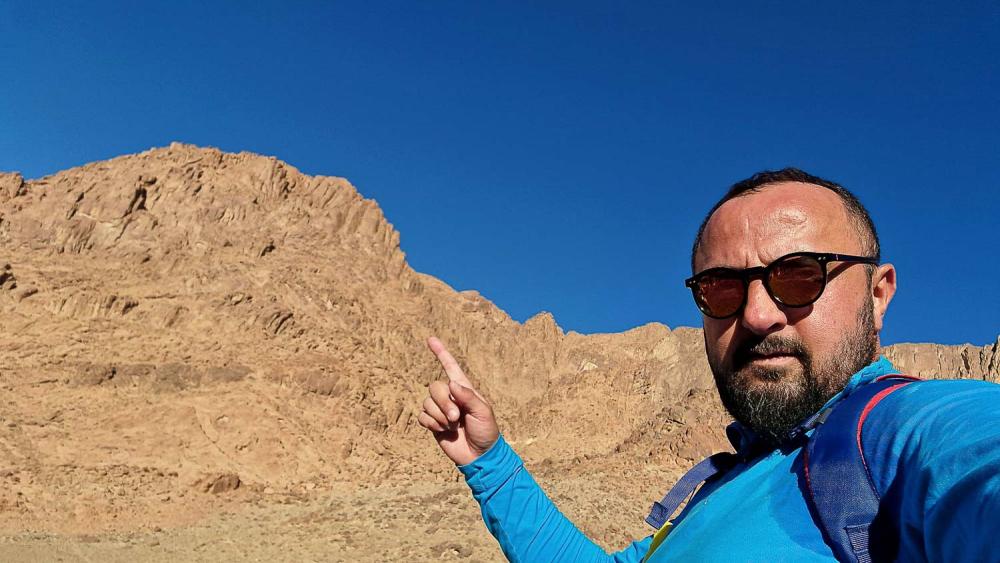
There are no city lights here to spoil the sky. Only beams from flashlights winding their way along the mountain trail and a silence occasionally broken by footsteps, the voice of a guide or a camel passing with its owner. At first, the going is easy. Then the ascent begins to remind you that the summit stands more than 2,200 metres above sea level.
Step by step. Stone by stone. In the darkness, you do not really know how far you have come or how much farther you still have to go. And perhaps that is for the best. At several points along the way, Bedouins offer tea, water and a brief rest. Their simple shelters in the middle of nowhere seem almost unreal. You sit down for a few minutes, warm your hands around a glass of hot tea and then continue towards the summit.
And then comes the final stretch. The hardest part of the journey. The last several hundred steep steps seem almost designed to test just how badly you really want to see what made you set off in the middle of the night.
I reach the summit while it is still dark. It is cold. Much colder than you might imagine when someone mentions Egypt and Sinai. People gather on the rocks, wrap themselves in blankets and jackets, and everyone looks towards the east. And then the spectacle begins – the one that makes you forget every single step of the climb.
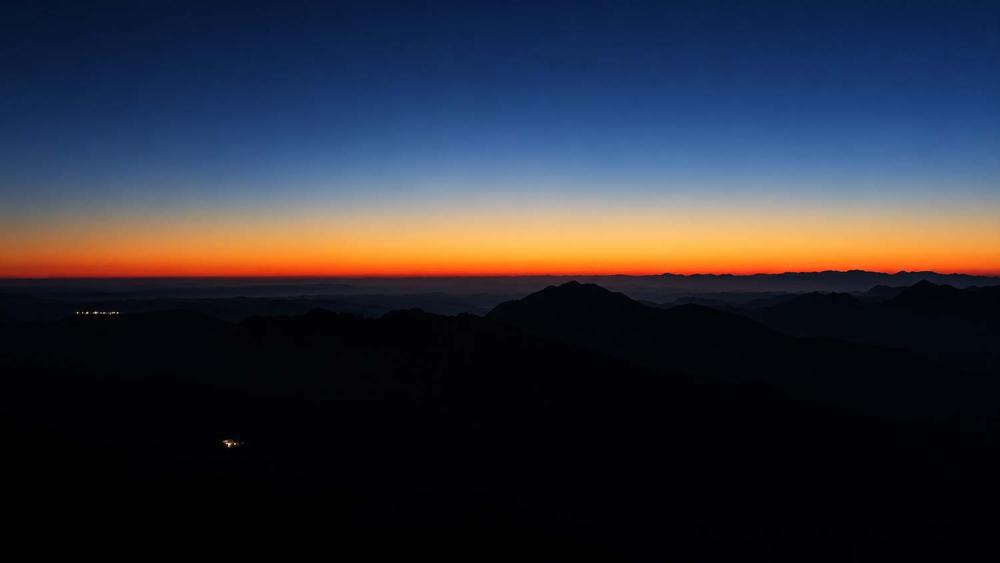
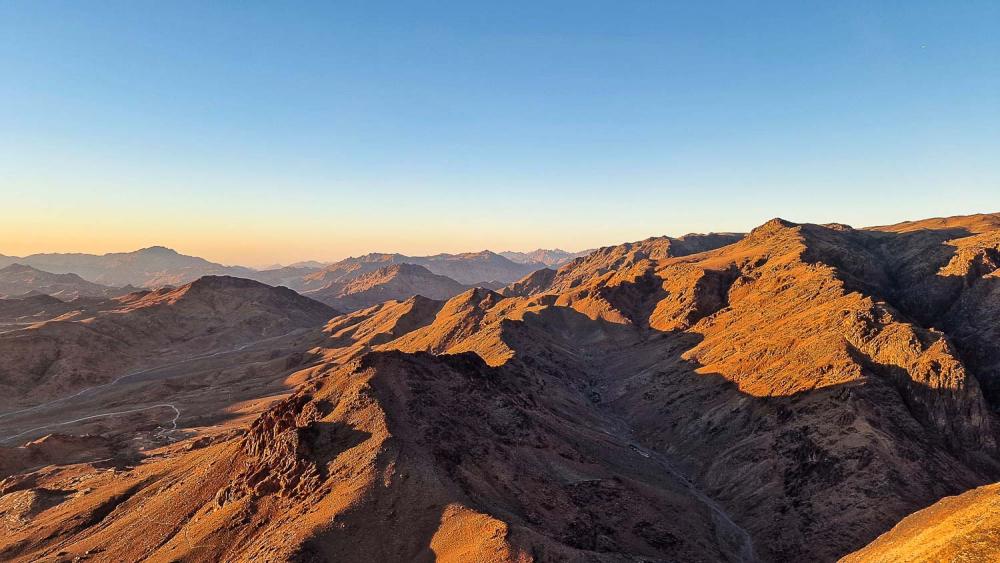
First, a thin line of light appears. The blackness slowly turns dark blue, then purple, orange and gold. Below us, as if on another planet, the endless rocky peaks of the Sinai Desert reveal themselves. The sun rises behind them and, within minutes, transforms the entire landscape.
I stand on the summit of Sinai and watch the desert awaken. It is difficult to capture that moment in a photograph. Even harder to put it into words. It is not simply a beautiful sunrise. After several hours of walking through complete darkness, the first light takes on an entirely different value. As though you have earned it. And perhaps that is precisely why dawn on Sinai is one of those experiences you remember for the rest of your life.
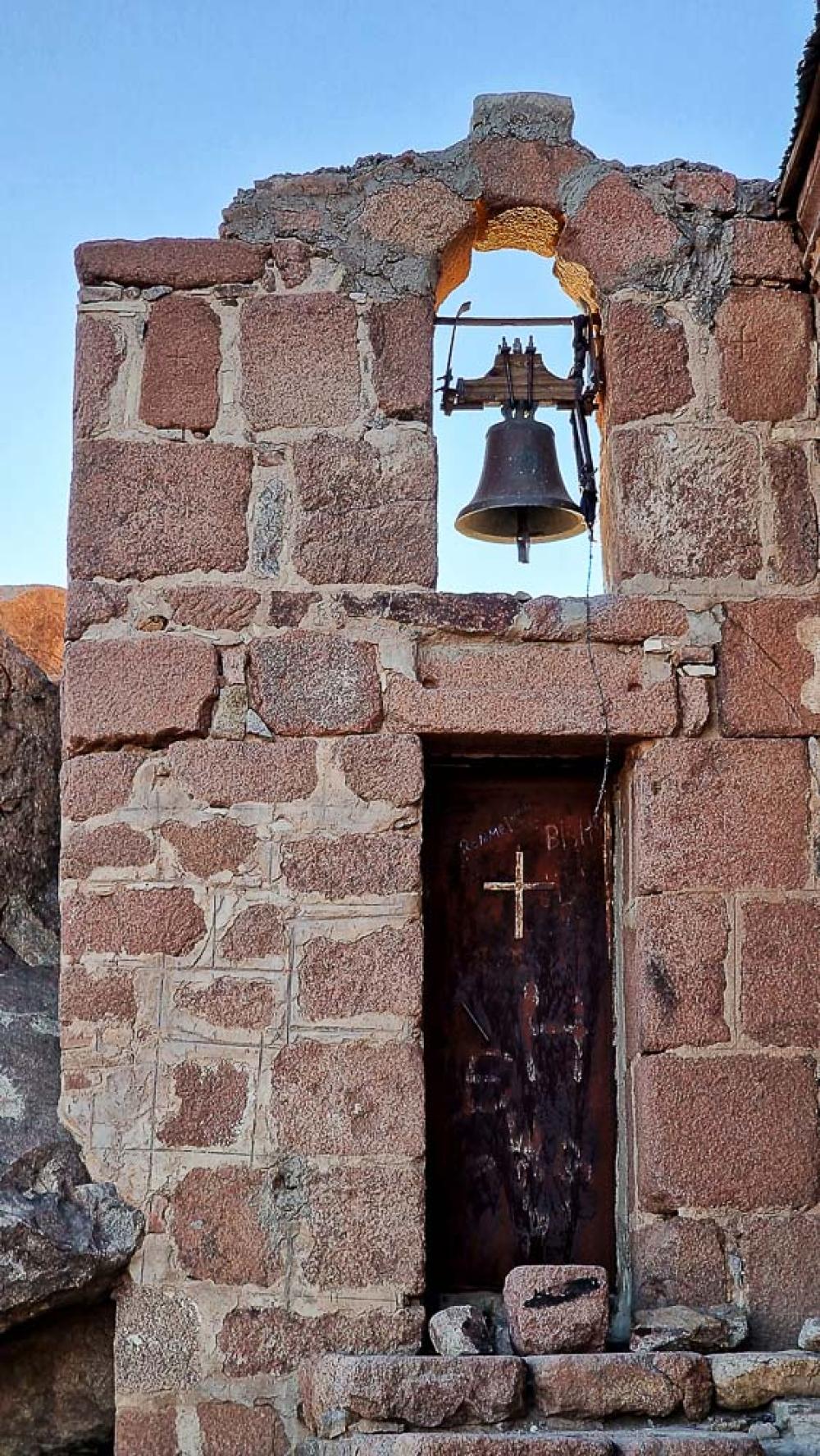
At the summit of Mount Sinai, at 2,285 metres, I am greeted by the small Orthodox Chapel of the Holy Trinity and a mosque, standing almost side by side among the bare rocks. The Chapel of the Holy Trinity was built on the site that Christian tradition associates with Moses’ encounter with God and the receiving of the Ten Commandments. The present-day stone chapel dates from the 20th century and is generally not open to visitors. In its immediate vicinity stands a small mosque dedicated to the Prophet Musa – Moses, who is also revered in Islam. Two modest buildings on a bare mountain summit testify to just how important Sinai is as a sacred place, revered by the great monotheistic traditions.
There is nothing around them to distract the eye – only rock, sky and the endless peaks of the Sinai Desert. As we stand at the summit, the cold seeps beneath our jackets, but no one is in a hurry to leave. We all look east, to where the blackness of night is slowly turning into the golden line of a new day.
The descent reveals everything the night had hidden from us. Only then do I see the landscape we had crossed – rugged rocks, deep ravines and mountains almost entirely devoid of vegetation. Down below, nestled among them, another place awaits that makes this part of Sinai so special.
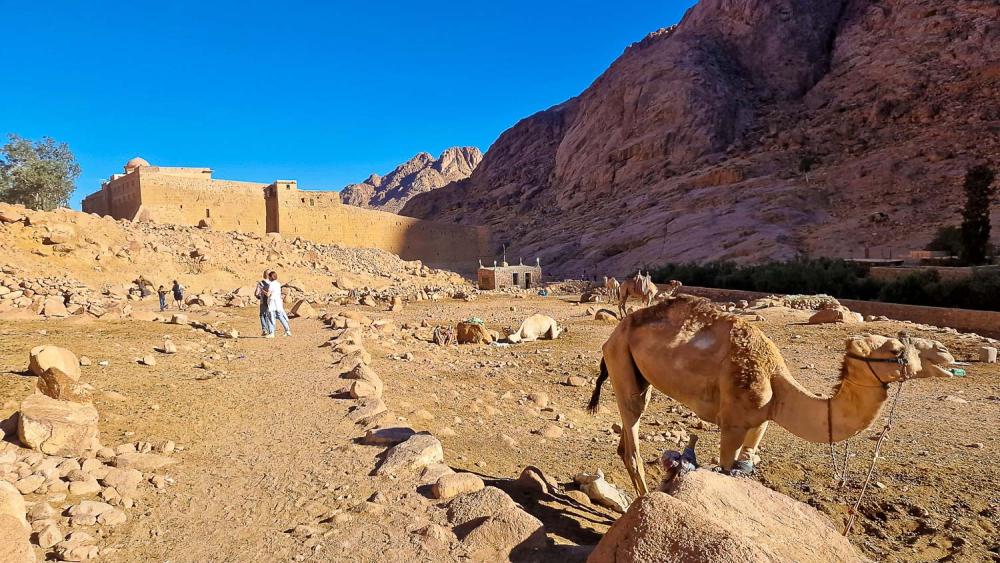
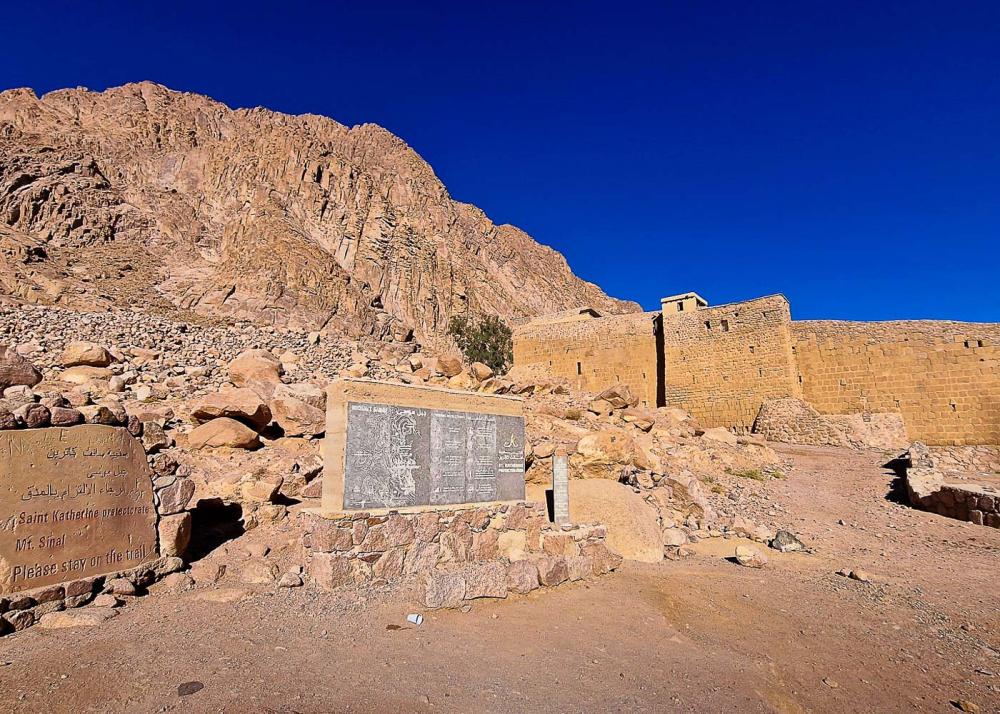
Built in the 6th century at the foot of Mount Sinai, it is one of the world’s oldest Christian monasteries still in continuous use today. Behind its massive walls are centuries of history, ancient icons and manuscripts.
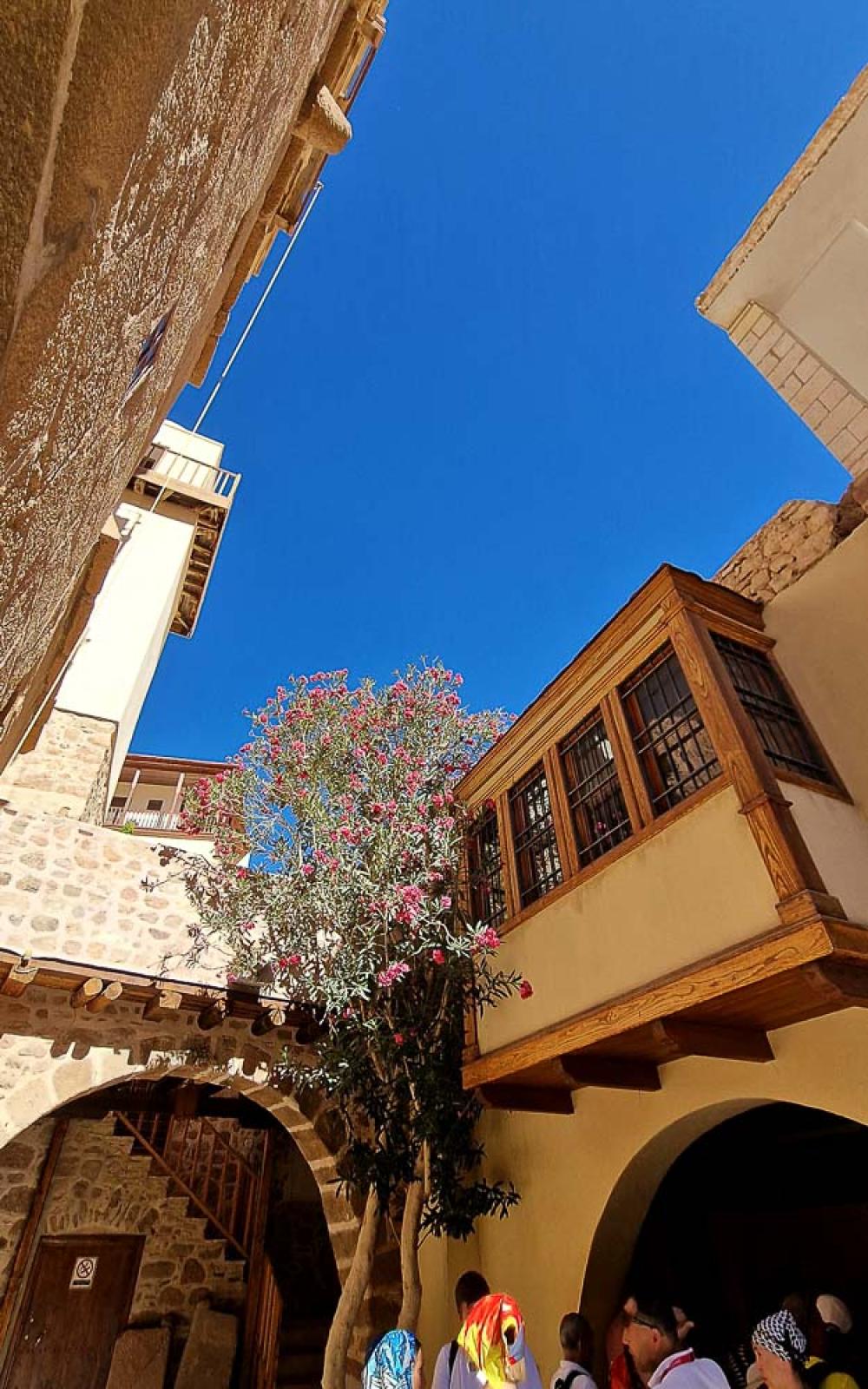
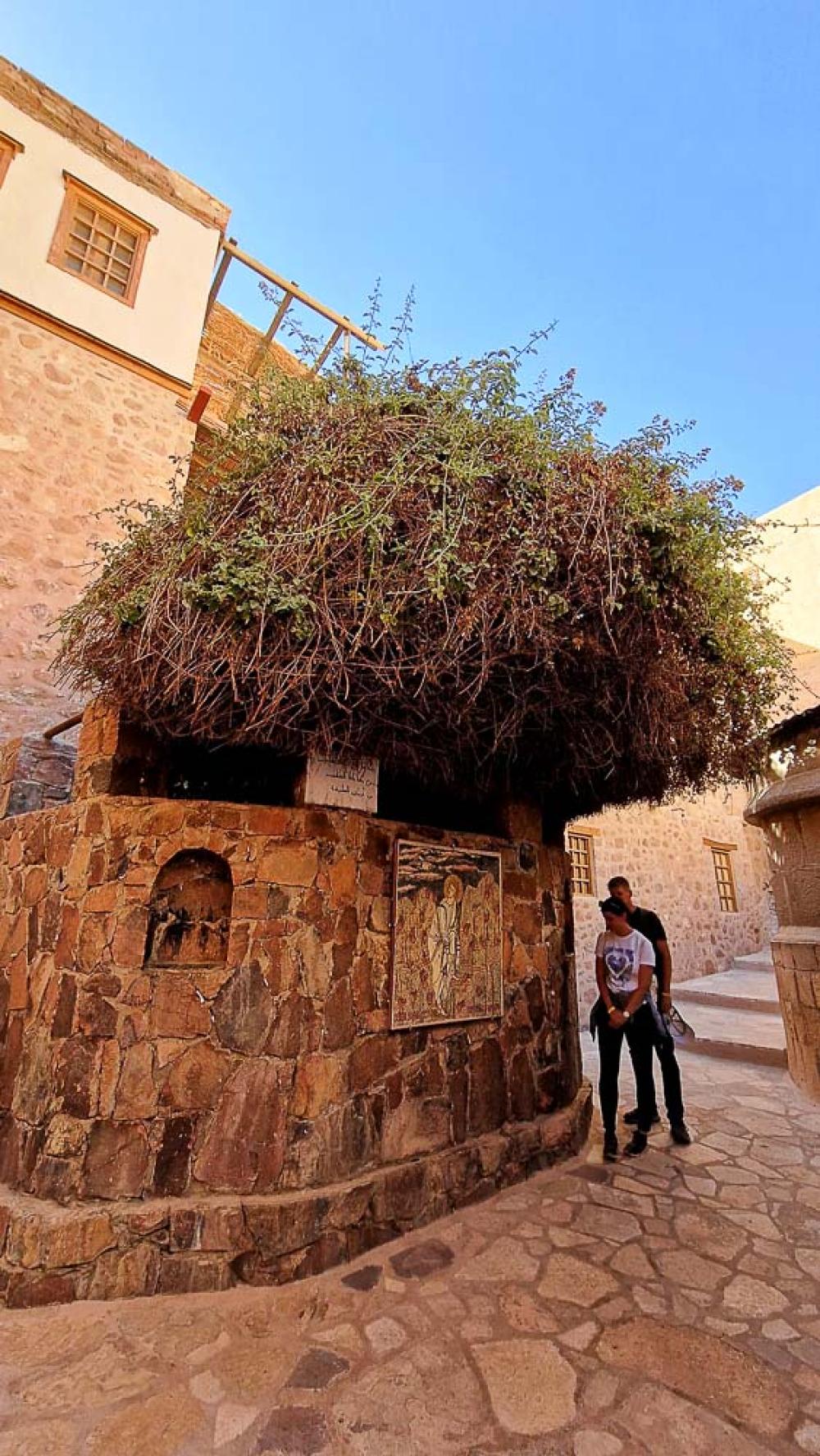
One place in particular attracts attention within the monastery walls. The Burning Bush, which tradition holds to be descended from the bush from which God spoke to Moses and called upon him to lead the Israelites out of Egypt. According to the biblical account, the bush burned without being consumed, becoming a symbol of God’s presence and the sanctity of this place. It still grows beside the monastery wall today, carefully tended by the monks. Another fascinating detail is the mosque within the monastery walls, built during the Middle Ages. It further highlights the remarkable history of this place, situated in a land sacred to Christians, Muslims and Jews.
Napoleon Bonaparte conquered Egypt in 1797 and placed the monastery under his protection, granting it a document bearing his signature. He also ensured the restoration of the northern wall of the fortress, which had been damaged by floods in 1798.
After a night spent on the mountain, the silence of the monastery feels almost like a natural continuation of everything we experienced above. Whether you are a believer or not, it is difficult to remain indifferent to a place that for centuries has brought together people of different languages, cultures and corners of the world.